f you’re married and preparing for Army OCS, one of the questions you might not expect to ask is:
“Should I wear my wedding ring?”
The short answer: Yes, but make it a rubber one.
Here’s why almost every married trainee chooses silicone over metal.
Side note, there are strong options on Amazon for just a few bucks, which is 20-40 dollars cheaper than retail:
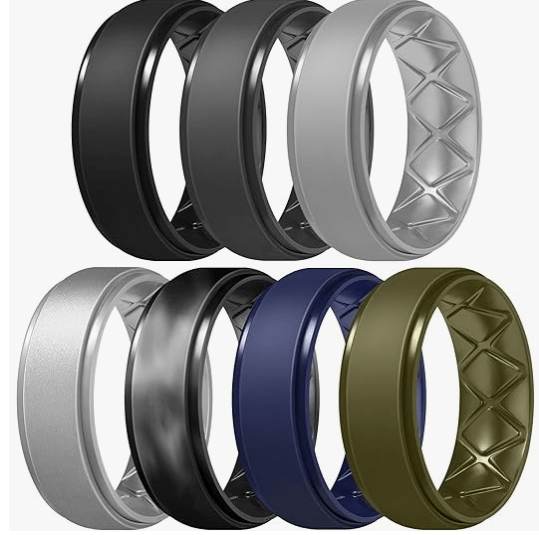
Metal Rings Are Allowed… But They’re a Risk
Army regulations technically allow you to wear a single, plain wedding band. But at BCT, a metal ring quickly becomes a liability:
1. Safety Hazards
Metal rings can:
- snag on equipment
- catch on fences or obstacles
- pinch skin under heavy loads
- cause ring avulsion (a serious finger injury)
- burn or conduct heat in field environments
During combatives, climbing, and obstacle courses, your drill sergeants may even require you to remove it.
2. Constant On/Off = Easy to Lose
Trainees take rings off for:
- PT
- Obstacle courses
- Ruck marches
- Weapons training
- Combatives
The more you remove it, the more likely it ends up:
- lost in the grass
- forgotten in the bay
- dropped in the shower
- swept away during cleaning
Even a simple gold band can be expensive—or emotionally irreplaceable—to lose.
Rubber Rings Are the Perfect Solution
Silicone rings solve every problem that metal rings create. They are:
✔ Safe
Rubber stretches and breaks before it can injure your finger.
No snagging, no pinching, no metal-on-metal contact.
✔ Allowed Everywhere
Drill sergeants typically prefer rubber over metal because it eliminates safety concerns.
✔ Comfortable for Training
They don’t dig into your hand during:
- push-ups
- pull-ups
- deadlifts
- rifle drills
- ruck marches
You’ll forget you’re even wearing one.
✔ Cheap to Replace
If it breaks or disappears, you’re out maybe $5–$20—not hundreds.
Many trainees even bring a few backups.
Keep in mind, this blog does contain an affiliate link. If you would like to support this site, please considering using it, and I will make a small commission.
 Prepared Soldier
Leave a comment